A new research paper featured as the cover of Volume 17, Issue 12 of Aging-US was published on December 22, 2025, titled “A combination of differential expression and network connectivity analyses identifies a common set of RNA splicing and processing genes altered with age across human tissues.”
Aging Journal
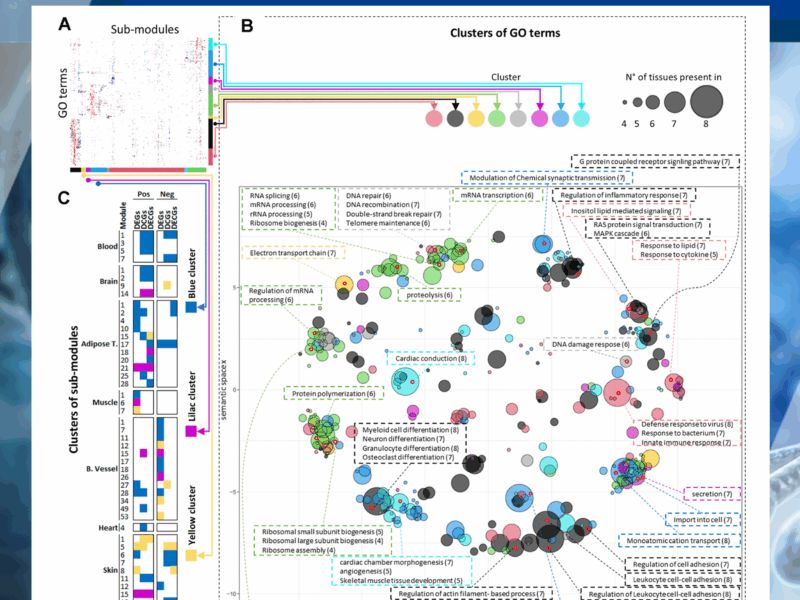
Although transcriptomic changes are known to occur with age, the extent to which these are conserved across tissues is unclear. Previous studies have identified little conservation in age-modulated genes in different tissues. Here, we sought to identify common transcriptional changes with age in humans (aged 20 to 70) across tissues using differential network analysis, assuming that differential expression analysis alone cannot detect all changes in the transcriptional landscape that occur in tissues with age.
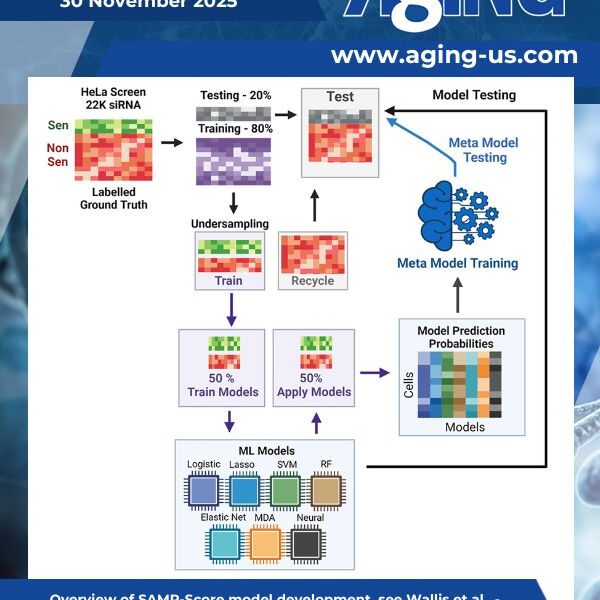
A new research paper featured on the cover of Volume 17, Issue 11 of Aging-US was published on October 30, 2025, titled “SAMP-Score: a morphology-based machine learning classification method for screening pro-senescence compounds in p16 positive cancer cells.”
Senescence identification is rendered challenging due to a lack of universally available biomarkers. This represents a bottleneck in efforts to develop pro-senescence therapeutics – agents designed to induce the arrest of cellular proliferation associated with a senescence response in cancer cells for therapeutic gain.
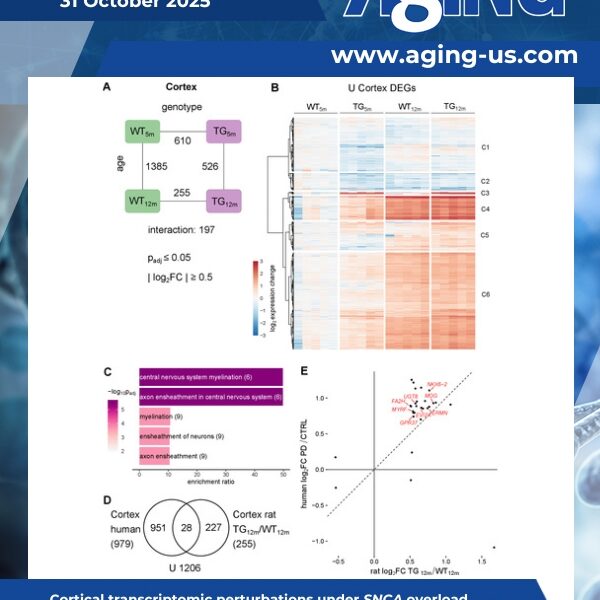
A new research paper featured on the cover of Volume 17, Issue 10 of Aging-US was published on October 20, 2025, titled “Brain region-specific and systemic transcriptomic alterations in a human alpha-synuclein overexpressing rat model.”
Synucleinopathies are age-dependent neurodegenerative diseases characterized by alpha-synuclein accumulation with distinct vulnerabilities across brain regions. Understanding early disease stages is essential to uncover initial molecular changes that might enable earlier diagnosis and causal therapy.
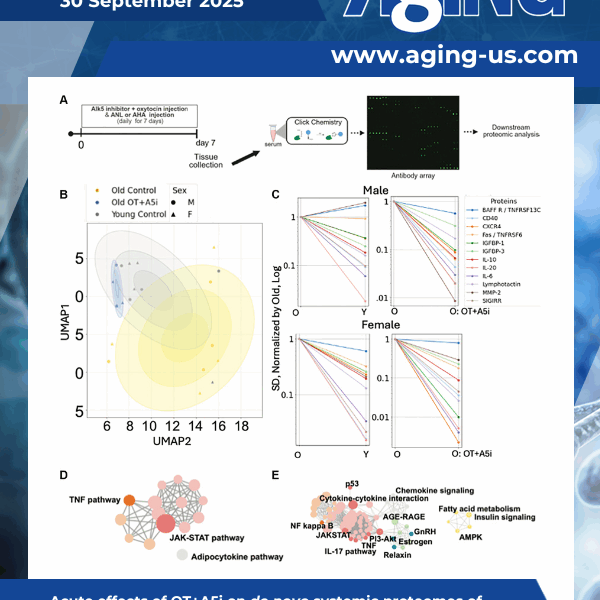
A new research paper featured as the cover of Volume 17, Issue 9 of Aging-US was published on August 21, 2025, titled “Sex-specific longitudinal reversal of aging in old frail mice.”
Here, we examined whether simultaneous calibration of pathways that change with aging in opposite directions would be more effective in increasing healthspan and lifespan. Moreover, we started with the challenging age group – frail 25-months-old mice that are equivalent to ~75-year-old people.
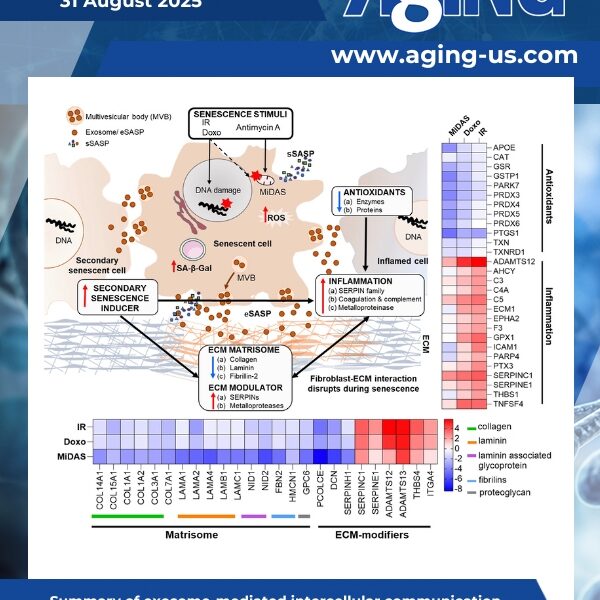
A new research paper featured on the cover of Volume 17, Issue 8 of Aging (Aging-US) was published on July 30, 2025, titled “Exosomes released from senescent cells and circulatory exosomes isolated from human plasma reveal aging-associated proteomic and lipid signatures.”
Senescence emerged as significant mechanism of aging and age-related diseases, offering an attractive target for clinical interventions. Senescent cells release a senescence-associated secretory phenotype (SASP), including exosomes that may act as signal transducers between distal tissues, and propagate secondary senescence.