A new essay was published in Volume 18 of Aging on August 6, 2026, titled “Misha Blagosklonny: a life of ideas.”
Aging Journal

A new research perspective was published in Volume 18 of Aging on July 24, 2026, titled “A brief history of the hyperfunction theory of aging and future directions.”
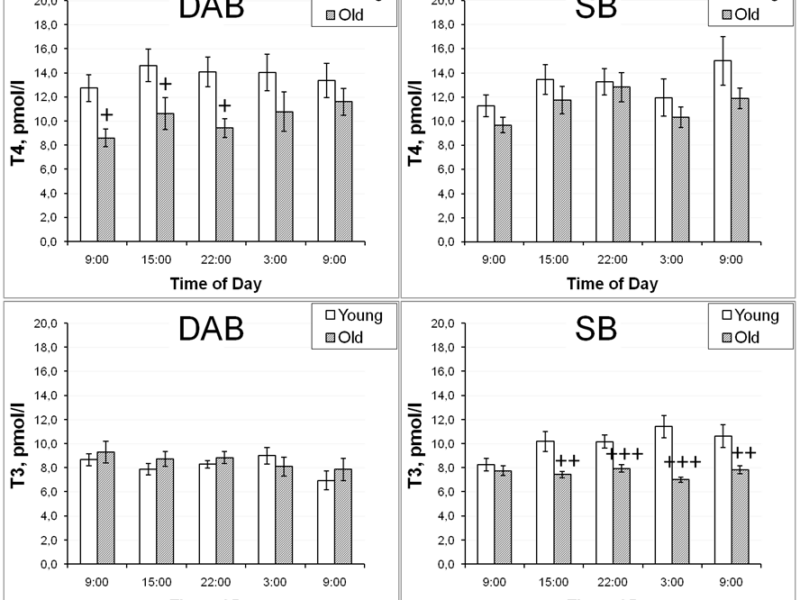
A new review was published in Volume 18 of Aging on June 11, 2026, titled “Age-related dysfunctions of the neuroendocrine axes in nonhuman primates with depression-like and anxious behavior.”

Dr. David Gems from University College London joins new host Dr. Yuan Zhao from Queen Mary University of London to discuss a review they co-authored in Volume 17, Issue 12 of Aging-US, titled “Aging as a multifactorial disorder with two stages.”

A new editorial was published in Volume 18 of Aging-US on March 10, 2026, titled “Healthy life extension: Geroscience’s north star.”
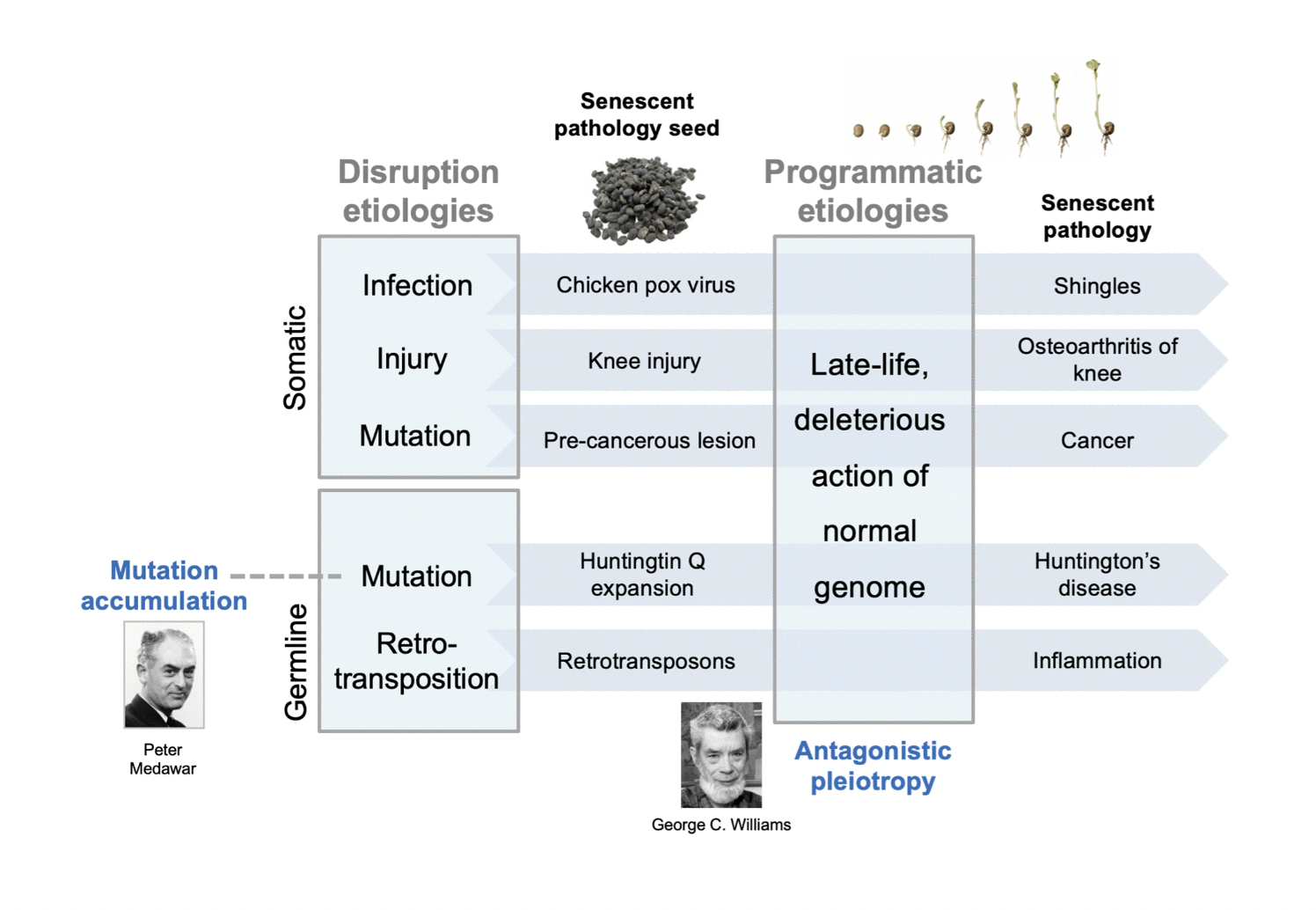
A new review was published in Volume 17, Issue 12 of Aging-US on December 30, 2025, titled “Aging as a multifactorial disorder with two stages.”

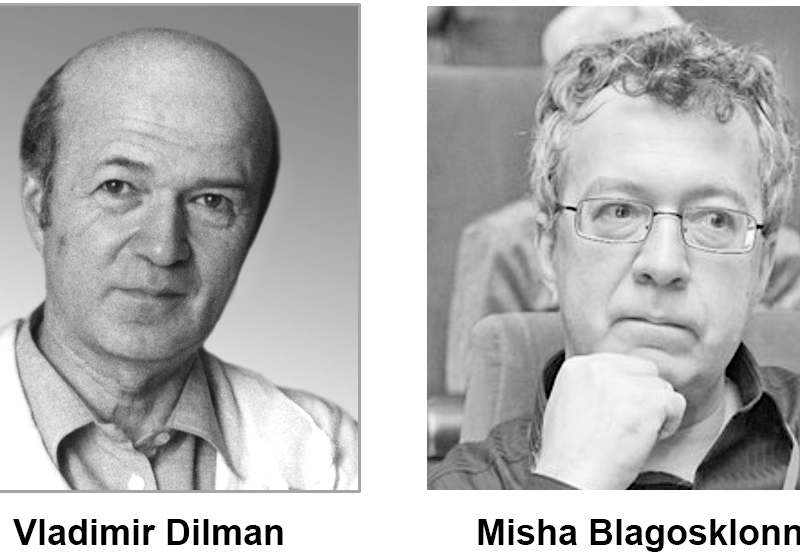
A new essay was published in Volume 17, Issue 11 of Aging-US on November 19, 2025, titled “On the intergenerational transfer of ideas in aging and cancer research: from the hypothalamus according to V.M. Dilman to the mTOR protein complex according to M.V. Blagosklonny.”

Impact Journals, the publisher of Aging, is once again proudly sponsoring the Open Access Team in the annual Ride for Roswell.

Aging (Aging-US) is pleased to announce a special Call for Papers for a commemorative collection honoring the legacy of Dr. Mikhail (Misha) Blagosklonny, the founding editor of the journal and a pioneer in aging biology. His groundbreaking work shaped fundamental concepts in the field, particularly regarding the role of mTOR in aging and cancer, the use of rapamycin, bypassing senescence during the process of transformation, personalized medicine, and theories on why we age.
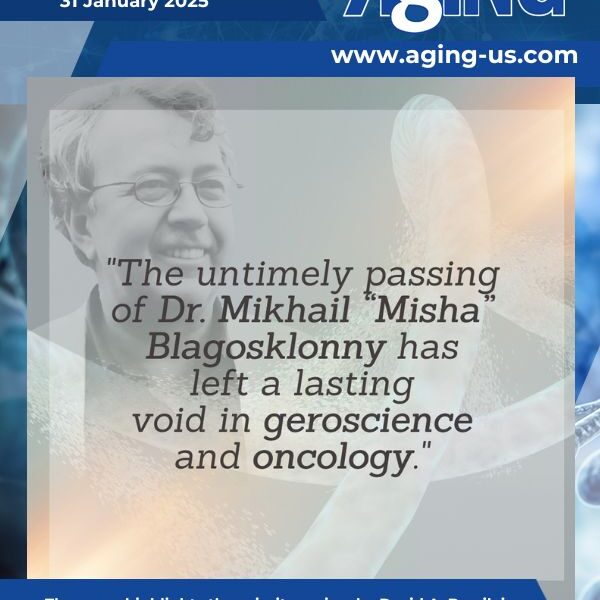
The untimely passing of Dr. Mikhail “Misha” Blagosklonny has left a lasting void in geroscience and oncology. This review examines his profound contributions, focusing on his pioneering the Hyperfunction Theory and his advocacy for rapamycin, an mTOR inhibitor, as a therapeutic agent for lifespan extension.